
RUMI
Translated by Coleman Barks
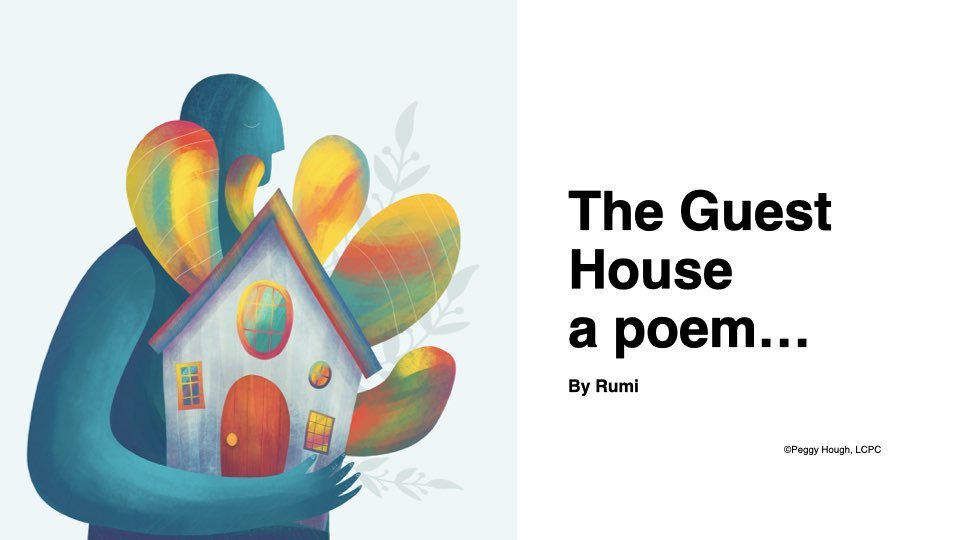
This being human is a guest house.
Every morning a new arrival.
A joy, a depression, a meanness,
some momentary awareness comes
as an unexpected visitor.
Welcome and entertain them all!
Even if they’re a crowd of sorrows,
who violently sweep your house
empty of its furniture,
still, treat each guest honorably.
He may be clearing you out
for some new delight.
The dark thought, the shame, the malice,
meet them at the door laughing,
and invite them in.
Be grateful for whoever comes,
because each has been sent
as a guide from beyond.
The poem opens: “This being human is a guest house. Every morning a new arrival.”
Most of us associate guest houses with welcoming, relaxing, snacks and drinks, the possibility of meeting new people.
Rumi suggests we welcome the guests that visit us each day ~ our feelings.
Dr. Norman Rosenthal in his book, Poetry Rx, points out that “One way in which our feelings are like guests in a guest house is that they constantly come and go ~ a valuable point to bear in mind when unpleasant feelings arrive or when good feelings leave.”
Dr. Rosenthal goes on to point out that in his list of guest-feelings, Rumi mixes them up, so joy sits right next to depression and meanness. “That is how emotions are”, he says…”sometimes they alternate, sometimes they coexist, even if they are opposites.

INVITING FEELINGS
I like to use this poem for its humanity. Rumi tells us sometimes the visitor comes unexpectedly; a ‘momentary awareness” we are invited to be prepared for. He tells us that these guest emotions may arrive “as a crowd of sorrows.” And still, even if they are traumatic, the aftermath of feeling these emotions may follow in something we can embrace as a delightful gift.
Rumi addresses the dark thoughts of which we may be ashamed. He suggests we laugh at them and invite them in…to be grateful for what these painful thoughts may bring. He suggests they may be guiding us.
